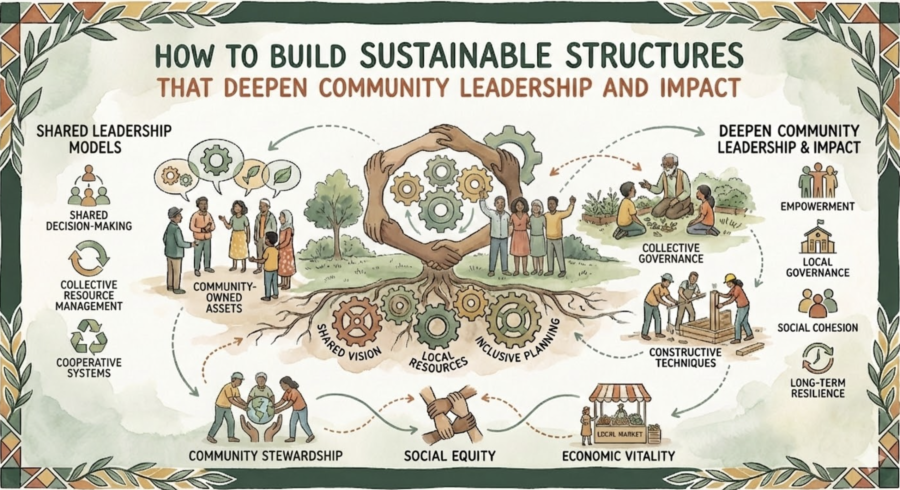
The key to rooted social change is our ability to organize for sustained periods of time. For nonprofits and grassroots initiatives committed to community power, sustainability is not just about financial longevity—it’s about building structures that hold community leadership, preserve institutional memory, and make organizing possible over the long haul.
“Where there is patience, there is victory.”
True sustainability does not center executive authority, donor influence, or rigid bureaucracy. It centers the people closest to the issues.
Real resilience means that when staff turnover happens, funders shift priorities, or political conditions change, the work continues because leadership and knowledge already live within the community. When structures hold community leadership, impact becomes durable—not dependent on individual personalities or short-term funding cycles.
Sustainability Comes From the Base, Not the Boardroom
Too many nonprofits define sustainability as grant renewals. But communities sustain movements—not paperwork. Sustainable structures must prioritize leadership development that is:
- Rooted in lived experience.
- Accountable to community needs.
- Transferable across generations.
- Independent of titles or employment status.
This requires shifting from a culture where professionalized staff drive all decision-making toward one where community members facilitate spaces, organize campaigns, and manage logistics. When community members hold real leadership—not advisory roles or symbolic seats—impact survives beyond the fiscal year.
Reduce Fragility, Don’t Add Complexity
Nonprofits often mistake structure for bureaucracy. Bureaucracy drains energy; structure channels it. Sustainable systems are simple, transparent, and functional. They should:
- Make it easy for people to join and participate.
- Decentralize information to reduce bottlenecks.
- Allow leaders to rotate roles without chaos.
Examples of resource-sustaining systems:
- Distributed Facilitation: Rotating roles during meetings and non-staff leadership tracks.
- Community Onboarding: Clear pathways for activation, political education, and mentorship or buddy systems.
- Shared Documentation: Agendas and timelines are accessible to all, ensuring work isn’t siloed on one staff member’s laptop.
Align Systems With Community Pace, Not Institutional Urgency
Urgency—especially urgency imposed by funders—often leads to rushed decisions and burnout. Structures that sustain leadership move at relational speed.
This looks like expanding timelines to ensure accessibility, making leadership processes visible, and pausing when capacity is low rather than stretching people thin. When the community sets the pace, decisions reflect lived realities, not institutional deadlines.
Embed Accountability Structures That Face the Community, Not Just Staff
Traditional nonprofits practice accountability upward—to boards, executives, or funders. Movements sustain themselves when accountability moves outward.
Examples of community-facing accountability:
- listening circles before strategic changes
- community members reviewing progress, not just donors
- transparent reporting on commitments made
- agreements about shared ownership of outcomes
This type of accountability:
- keeps organizations grounded
- prevents mission drift
- avoids extractive “consultation” practices
- builds trust that survives leadership transitions
When people see their leadership respected, they do not disengage—they deepen involvement.
Build Structures That Make Leadership Development Intentional
Leadership doesn’t emerge randomly—it must be intentional developed and nurtured. More importantly, the best leadership pipelines are rooted in lived experiences—not based on résumés or credentials. Here’s what intentional leadership development could look like:
- Prioritize Lived Experience: Don’t look for credentials; look for community trust while trusting that communities are the experts in analyzing their problems and finding solutions that work for them.
- Ongoing Political Education: Don’t just train once; make learning continuous, and not just for frontline staff working with communities but for all layers of the organizations, especially leadership.
- Hard Skills Training: Identify what the communities needs are and offer practical training such as de-escalation, canvassing, data gathering and analysis, storytelling for impact, or meeting facilitation.
- Create “Pods”: Instead of one manager, build committees that share responsibility.
When leadership is widely held, someone leaving does not collapse the work.
Preserve Movement Knowledge
Movements weaken when knowledge disappears with a departing staff or community leader. Sustainable structures document how decisions were made, archive campaign materials, and share political lessons learned.
Knowledge preservation is movement infrastructure. By using community-led learning sessions, recording campaign debriefs, rotating note taking responsibilities, and sharing roadmaps with communities not just funders, we keep future generations from starting from zero.
The Bottom Line: Sustainability Is a Strategy for Power
When communities hold leadership structurally—not symbolically—impact deepens. Programs evolve into organizing, and strategies reflect lived experience rather than organizational priorities.
Sustainability isn’t about surviving—it’s about co-creating something with communities that they are eager to inherit.
When organizations create structures that strengthen community leadership, the work becomes part of a long-term vision for justice, self-determination, and collective liberation.
That is longevity. That is community impact that lasts.
Leave a Reply